
To read a supplement label, start with the Supplement Facts box. Check the serving size first, then the amount listed for each ingredient. If you see a “proprietary blend”, know that it shows only the total weight of the mix, not how much of each ingredient it contains. Finally, look for an independent testing seal such as USP or NSF, because the FDA doesn’t approve supplements before they go on sale.
Below, we walk through each step and explain why proprietary blends matter. Then we use the real labels of four supplements we’ve reviewed as worked examples.
This post contains links to our reviews. If you buy through a link on those pages we may earn a commission, at no extra cost to you. How we make money.
Not medical advice. Talk to your doctor or pharmacist before starting a supplement, especially if you take medicines.
Key takeaways
- Serving size comes first. Every amount is per serving, and a serving can be more than one capsule.
- Look for an amount next to every ingredient. It’s the only way to compare a dose with what research used.
- A proprietary blend shows one total weight. You learn the order of the ingredients, not how much of each you get.
- A testing seal checks quality, not results. It means the label matches the contents, not that the product works.
Why the label matters more than the marketing
Supplements aren’t checked like medicines. The FDA says it “is not authorized to approve dietary supplements for safety and effectiveness before they are marketed” (FDA). NCCIH, part of the US National Institutes of Health, adds a blunt warning: “What’s on the label may not be what’s in the product” (NCCIH). The label is still the best information you have, so it’s worth knowing how to read it.
How to read a Supplement Facts label, step by step
- Find the serving size. The FDA defines a serving as the most the label recommends you take at one time. If there’s no recommendation, one serving is one unit, such as one tablet (FDA Dietary Supplement Labeling Guide). If a serving is two capsules, every number below is for two.
- Check servings per container. Thirty servings at one a day is a one-month supply.
- Read the “Amount Per Serving” column. Look for a weight (mg, mcg) next to each ingredient. For probiotics, look for a count of live organisms (CFU).
- Check the “% Daily Value” column. It shows how much of a nutrient’s daily target one serving gives you.
- Spot any proprietary blend. It has its own line, one total weight and a list of ingredients underneath.
- Read “Other ingredients”. Fillers, sweeteners, flavours and capsule materials go here. It matters if you have allergies.
- Read the cautions and small print. Look for warnings about pregnancy, children and medicines, and for who makes the product.
- Look for a third-party testing seal, then check it on the certifier’s own website.
- Show the label to your pharmacist or doctor, with a list of your medicines. The FDA advises talking to “your doctor, pharmacist, or other healthcare professional” before using a supplement (FDA).
What is a proprietary blend?
A proprietary blend is a group of ingredients listed under one name with one total weight. US labelling rules say the blend’s amount is the total weight of the ingredients in it, and the ingredients must be listed “in descending order of predominance by weight” (21 CFR 101.36). So the first ingredient is the largest by weight and the last is the smallest.
What the rules don’t require is the weight of each ingredient inside the blend. Each one is simply marked with the “Daily Value Not Established” symbol. Nutrients that do have a Daily Value, like vitamins and minerals, must still be listed with their own amounts (FDA).
Why this matters to you:
- You can’t compare doses with research. Studies test specific amounts. Without the amount, you can’t tell if a product is close.
- Your doctor can’t judge an interaction. If one ingredient might clash with a medicine, the amount matters.
- The order is your only clue. A blend of seven ingredients could be mostly one of them.
Blends are legal and common. A blend isn’t a sign that something is wrong. It just means you have less to go on.
What “% Daily Value” and “†” mean
The % Daily Value is the amount of a nutrient in one serving, divided by the official Daily Value, times 100 (FDA). So 50% means one serving gives half the daily target.
Many ingredients, such as herbs and probiotics, have no official Daily Value. The label then puts a symbol in that column, often a dagger (†) or an asterisk, pointing to a footnote: “Daily Value not established” (21 CFR 101.36). That isn’t a warning. There’s simply no official target to compare against.
You’ll often see another asterisk next to claims on the front of the pack. It leads to “These statements have not been evaluated by the Food and Drug Administration.” Supplements can’t claim to diagnose, treat, cure or prevent disease, and claims about how a product supports the body must carry that statement (NCCIH).
Third-party testing seals: USP, NSF and what they really mean
Independent groups such as USP (US Pharmacopeia) and NSF test supplements and let passing products show their seal. Operation Supplement Safety, a US Department of Defense resource, says a seal “means the product content and label match.” It also says certification “does not mean the product has been evaluated for safety” or for “effectiveness (whether it works the way it is claimed to)” (OPSS).
So a seal is a good sign on quality. It isn’t proof that a product will help you.
To make sure a seal is real, check the certifier’s own listing. NSF’s sport programme lets you search certified products by name, keyword or lot number (NSF Certified for Sport). For a USP seal, check USP’s website. And note that “verified” or “certified” written by the manufacturer itself doesn’t necessarily guarantee quality (NCCIH).
Red flags on a supplement label
- A large blend with many ingredients and no amounts. The more ingredients share one total, the less you know about each.
- No amount for the ingredient you care about most. Ask the company before you buy.
- Probiotics with no CFU count. A weight in mg doesn’t tell you how many live organisms you get.
- “Clinically proven” with no study named. If you can’t look the study up, treat it as marketing. The FDA’s advice: “If something sounds too good to be true, it probably is.” It also warns against assuming “natural” means safe (FDA 101).
- Disease or cure claims. The FDA treats a product meant to treat or prevent a disease as a drug (FDA).
- No company name or contact details. You should be able to tell who stands behind the product.
Worked examples: four real labels we’ve reviewed
Here’s how four supplements we’ve reviewed look when you read their labels this way. The table shows only what each label states. It says nothing about whether a product works.
| Product | Ingredients with their own amount | Blend(s) and total weight | What the label doesn’t tell you | Testing seal shown |
|---|---|---|---|---|
| ProDentim | Inulin 100 mg; Streptococcus salivarius 20 mg | 20 mg probiotic blend (3.5 billion CFU) of three strains | The amount of each of the three strains; a CFU count for S. salivarius | None shown |
| FemiCore | None | 350 mg herbal blend; 50 mg blend of five named probiotic strains | The amount of each herb and strain; a CFU count | None shown |
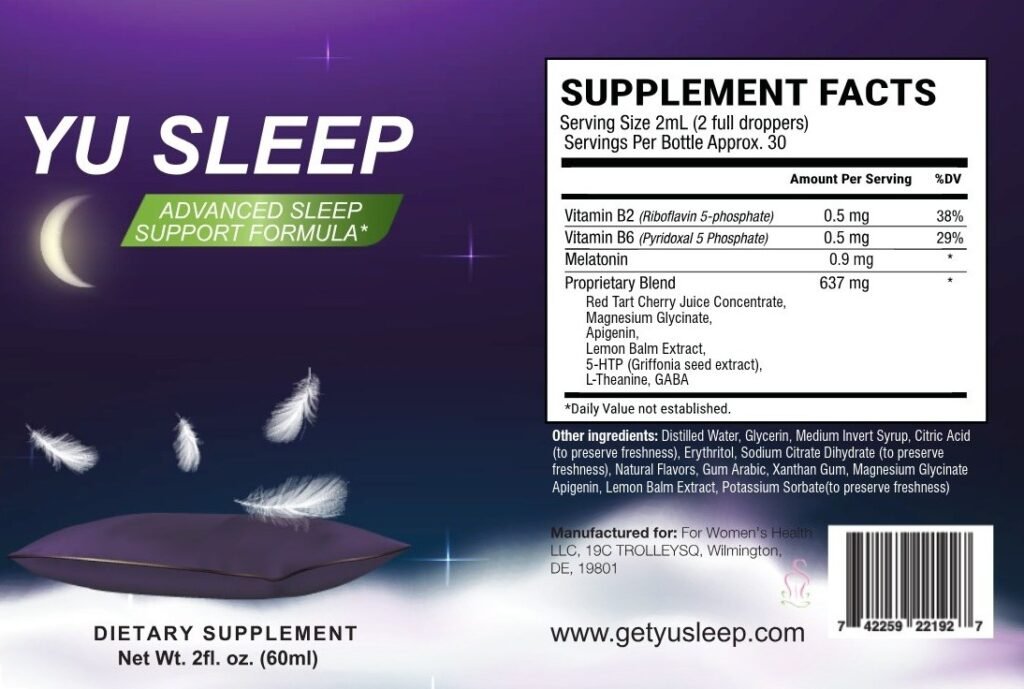
| Yu Sleep | Melatonin 0.9 mg; vitamin B2 0.5 mg; vitamin B6 0.5 mg | 637 mg blend of seven ingredients | The amount of each of the seven, including 5-HTP | None shown |
| Phytomem One | None | 458 mg blend of ten ingredients | The amount of each of the ten (xylitol, a sweetener, is listed first) | None on the label the vendor shared |
What each label teaches
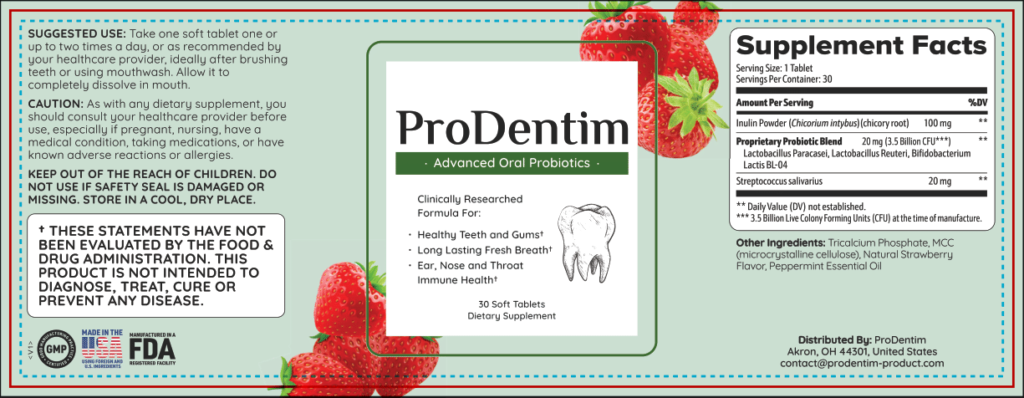
ProDentim: a partly open label. Inulin and S. salivarius have their own amounts, which many products skip. The other three probiotic strains share one 20 mg, 3.5 billion CFU total, so you know the size of the group but not of each strain. The label also doesn’t say which S. salivarius strain is used. Our ProDentim review goes through each ingredient.

FemiCore: good naming, no amounts. The label names all five probiotics down to the strain code, such as Lactobacillus crispatus LCr86. That’s more detail than most labels give. But the herbs share one 350 mg blend and the probiotics share a 50 mg blend, with no CFU count. Two of the blend’s plant ingredients, bearberry and berberine, carry medicine and pregnancy cautions, which is exactly when amounts would help. Our FemiCore review covers those cautions.
Yu Sleep: the key amount is clear, the rest isn’t. Melatonin is listed at a low 0.9 mg, and B2 and B6 have amounts too. The other seven ingredients share a 637 mg blend. Here’s why that matters: a 2026 review of 13 trials found L-theanine may support sleep at 200–450 mg a day (Nutritional Neuroscience, 2026). With seven ingredients sharing 637 mg, you can’t tell how much L-theanine is in here. The blend also contains 5-HTP, so anyone on antidepressants or other medicines that affect serotonin should talk to their doctor first (Harvard Health). Our Yu Sleep review links the research.
Phytomem One: a lesson in ingredient order. The Supplement Facts box shows a serving of one tablet and 30 servings per container. Everything sits in a single 458 mg blend marked “†” for “Daily Value not established”. Because ingredients are listed by weight, xylitol, a sweetener listed first, is the largest part of the blend. Berberine is listed last, so it’s the smallest. The other eight fall somewhere in between, in amounts you can’t know. Our Phytomem One review looks at each ingredient.
None of this makes a product good or bad on its own. It shows how much each label lets you check before you buy. For more on sleep, energy and simple habits, visit our Health & Fitness section.
FAQ
What should I look at first on a supplement label?
The serving size. Every amount is per serving, so check whether that’s one capsule, two capsules or a dropperful before reading the other numbers.
Are proprietary blends bad?
Not necessarily. They’re legal and common. But they show only the total weight of the mix, so you can’t check how much of each ingredient you get. If one ingredient matters to you, ask the company or choose a product that lists it separately.
Does a USP or NSF seal mean a supplement works?
No. A seal means the contents match the label. According to Operation Supplement Safety, it doesn’t mean the product was checked for safety or effectiveness.
Why do some ingredients show a † instead of a % Daily Value?
Because there’s no official Daily Value for them, as with most herbs and probiotics. The symbol points to a footnote saying “Daily Value not established”.
Does the FDA approve supplements before they’re sold?
No. The FDA isn’t authorized to approve supplements for safety and effectiveness before they’re marketed.
Our honest take
A label can’t tell you whether a supplement will work for you. It can tell you what’s inside, how much and who checked it. If a label leaves you guessing, that’s worth knowing too. If you’re weighing up one of the four products above, our reviews of ProDentim, FemiCore, Yu Sleep and Phytomem One set out the pros, the cons and who should skip each one.
Want more plain-English guides like this? Join the WholesomePaths newsletter. One email. Three areas of growth. Zero spam.