
The hero instinct is the idea that men feel closest to a partner when they feel needed, respected and appreciated for what they bring. The term comes from relationship coach James Bauer. It’s a popular idea, not an established psychological theory, and you won’t find it in psychology textbooks or clinical research.
The useful part is simple. Most people, of any gender, feel more connected when their partner notices and values what they do. The rest of the idea is less solid, and it’s worth knowing where the line is.
Key takeaways
- What it is: a coaching concept from James Bauer, not a scientific model.
- What it gets right: feeling appreciated matters in relationships. Research on gratitude between partners supports that.
- What it oversimplifies: it treats all men as wired the same way, and it can drift into managing a partner instead of talking to them.
- What it can’t do: no idea, phrase or program can make a specific person commit, come back or change.
- Healthier use: specific, honest appreciation and clear requests. That works for everyone.
This post contains links to our reviews. If you buy through a link on those pages we may earn a commission, at no extra cost to you. How we make money.
Where the idea comes from
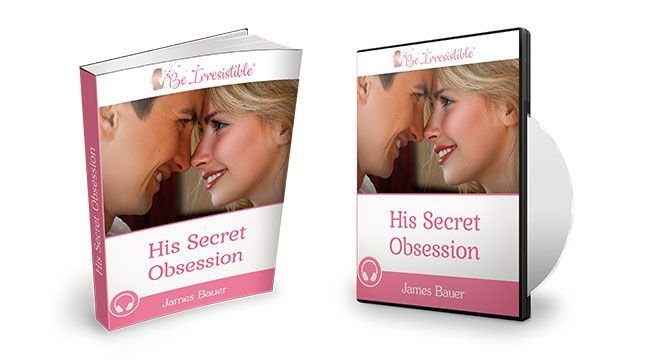
James Bauer is a relationship coach. He introduced the hero instinct in his paid guide, His Secret Obsession, which is aimed at women who want to understand the men they date or live with. The core claim is that men have a built-in drive to feel useful, to protect and provide, and to be respected for it. When a partner makes space for that, the book says, he feels more committed.
The phrase spread quickly online. Today you’ll see it in dating blogs, social videos and magazine-style articles, often with big promises attached. That’s partly why the search results for it are so noisy.
It’s worth being clear about what the term is. It isn’t drawn from a body of peer-reviewed studies, and psychologists don’t use it as a clinical concept. It’s one author’s way of packaging some common-sense observations about needs and respect. That doesn’t make it worthless. It just means you should read it as advice, not as science. We cover the guide itself, including what $49 gets you and where the sales page goes too far, in our His Secret Obsession review.
What the hero instinct gets right
Strip away the branding and the central point holds up: people tend to feel closer to partners who notice and value them.
A well-known set of studies by Amie Gordon and colleagues at the University of California, Berkeley, looked at gratitude in couples. Using daily diaries, lab observations and a nine-month follow-up, they found that people who felt more appreciated by their partner were more appreciative in return. Those more appreciative partners were more responsive to each other’s needs, more committed, and more likely to still be together months later (Gordon et al., 2012, Journal of Personality and Social Psychology).
The Gottman Institute, which builds on decades of research by John Gottman and Robert Levenson, makes a related point. Stable, happy couples have about five positive interactions for every negative one during conflict. One of its practical suggestions is intentional appreciation: noticing your partner’s good qualities and saying so, even in small ways (The Gottman Institute, “The Magic Relationship Ratio”).
So the hero instinct points at something real. Feeling needed and appreciated matters. But notice what the research is about: both partners, and mutual appreciation. It isn’t specific to men, and it isn’t a lever one person pulls.
What it oversimplifies
It leans on gender stereotypes
The idea assumes men share one inner drive to protect and provide. Some men relate to that. Many don’t, or feel it only sometimes. Women also want to feel capable and needed. So do partners in same-sex relationships. Treating a person as a “type” can make you miss who they actually are.
It can’t guarantee anything
Marketing around the hero instinct often promises that a man will commit, open up or stay. No idea can promise that. Another person’s feelings and choices are their own. A guide can help you communicate better. It can’t decide the outcome.
It can tip into manipulation
There’s a big difference between “I’ll tell him what I genuinely value about him” and “I’ll say certain words to trigger a reaction.” The first builds trust. The second treats a partner as a puzzle to solve. If you find yourself scripting messages to produce a feeling, pause. Most people sense when they’re being managed, and it tends to push them away.
It can put the work on one person
If one partner is doing all the appreciating, asking, adjusting and planning, that’s not a technique problem. Healthy relationships run both ways. The research above found appreciation works as a cycle between two people, not a one-way effort.
Healthier ways to use the useful part
Here’s how to keep what’s good about the idea without the stereotypes or the scripts. These work for any partner, of any gender. As we like to say, communication is a skill, not a personality trait.
Be specific when you thank someone
“Thanks for everything” is nice. Specific is better, because it shows you noticed.
- “Thank you for sorting the car out this week. I know it took a whole morning.”
- “I loved how you handled that call with your mum. You were really patient.”
- “You made dinner when I was wiped out. That meant a lot.”
Ask for help honestly, not strategically
Letting a partner help you can feel good for both of you. Just keep it real. Ask for things you actually want help with.
- “I’m stuck on this decision about work. Can I talk it through with you tonight?”
- “You’re better at this than me. Would you look at it with me?”
Notice effort, not only results
People feel valued when you see what they tried, not just what they got right. “I could see how hard you worked on that, even though it didn’t go the way you hoped” lands well with almost anyone.
Say what you need, kindly and clearly
Appreciation works best next to honesty. If something isn’t working, a calm, direct request beats hints and tests.
- “I’d love more time together at the weekend. Could we plan one thing, just us?”
- “When plans change last minute, I feel a bit sidelined. Could you text me earlier?”
Make it a two-way habit
Try a simple routine: at the end of the day, each of you names one thing you appreciated about the other. It takes a minute. It also keeps appreciation mutual, which is what the research actually supports.
If you’d like more on this, our relationships section has practical guides on communication, conflict and keeping connection alive.
When to get real help
Ideas like the hero instinct are fine for everyday communication. They’re not a fix for deeper problems.
- If you keep having the same fight, or one of you feels unheard most of the time, a couples counsellor or licensed marriage and family therapist can help. Going together is usually more useful than either of you reading a book alone.
- If you feel controlled, afraid, threatened or hurt, that isn’t a communication problem, and no technique will fix it. In the US, the National Domestic Violence Hotline is free, confidential and open 24/7: call 800-799-7233 or text START to 88788. Outside the US, look up your country’s domestic abuse helpline. If you’re in immediate danger, call your local emergency number.
FAQ
Is the hero instinct real?
It’s a real coaching idea, but not a scientific one. James Bauer coined the term. Psychology research does support the broader point that feeling appreciated helps relationships, for both partners.
Does the hero instinct work?
The part about genuine, specific appreciation is likely to help most relationships. The part that promises a man will commit or become devoted isn’t something any idea can deliver. Results depend on both people.
What are some hero instinct examples?
Common examples are thanking a partner for something specific, asking for their help or opinion on something that matters to you, and respecting their skills and decisions. All of these work just as well in any relationship, whatever the genders involved.
Is using the hero instinct manipulative?
It depends on how you use it. Honest appreciation isn’t manipulative. Saying things you don’t mean to get a reaction is. If you’d be uncomfortable with your partner knowing why you said something, that’s a sign to rethink it.
Do I need to buy His Secret Obsession to understand it?
No. The core idea fits in a paragraph, and this post covers it. The guide adds suggested phrases and examples for different relationship stages. If you’re curious, read our review first so you know what’s in it and what it can’t do.
Our honest take
James Bauer’s His Secret Obsession is where the hero instinct comes from. It costs $49 once and has a 60-day refund. Some of its communication advice is reasonable. But its sales page promises a specific man will commit, and no guide can do that. Read our His Secret Obsession review for what’s inside, who it suits and who should skip it.
Get one practical idea a week
Want more honest, practical relationship advice without the hype? Join our newsletter. One email. Three areas of growth. Zero spam.